


06 Sep A Curious Otter in the Garden: Bronze Sculpture and Water Feature
A Curious Otter in the Garden: Bronze Sculpture and Water Feature – Bringing Wildlife, Water and Movement Into the Garden
There is something particularly captivating about encountering an otter beside the water.
Perhaps it is their curiosity. Perhaps it is their playful character. Or maybe it is because seeing one in the wild still feels like a genuinely special moment.
The Curious Otter Bronze Garden Sculpture Fountain Water Feature takes that connection between animal and water and turns it into an imaginative garden feature.
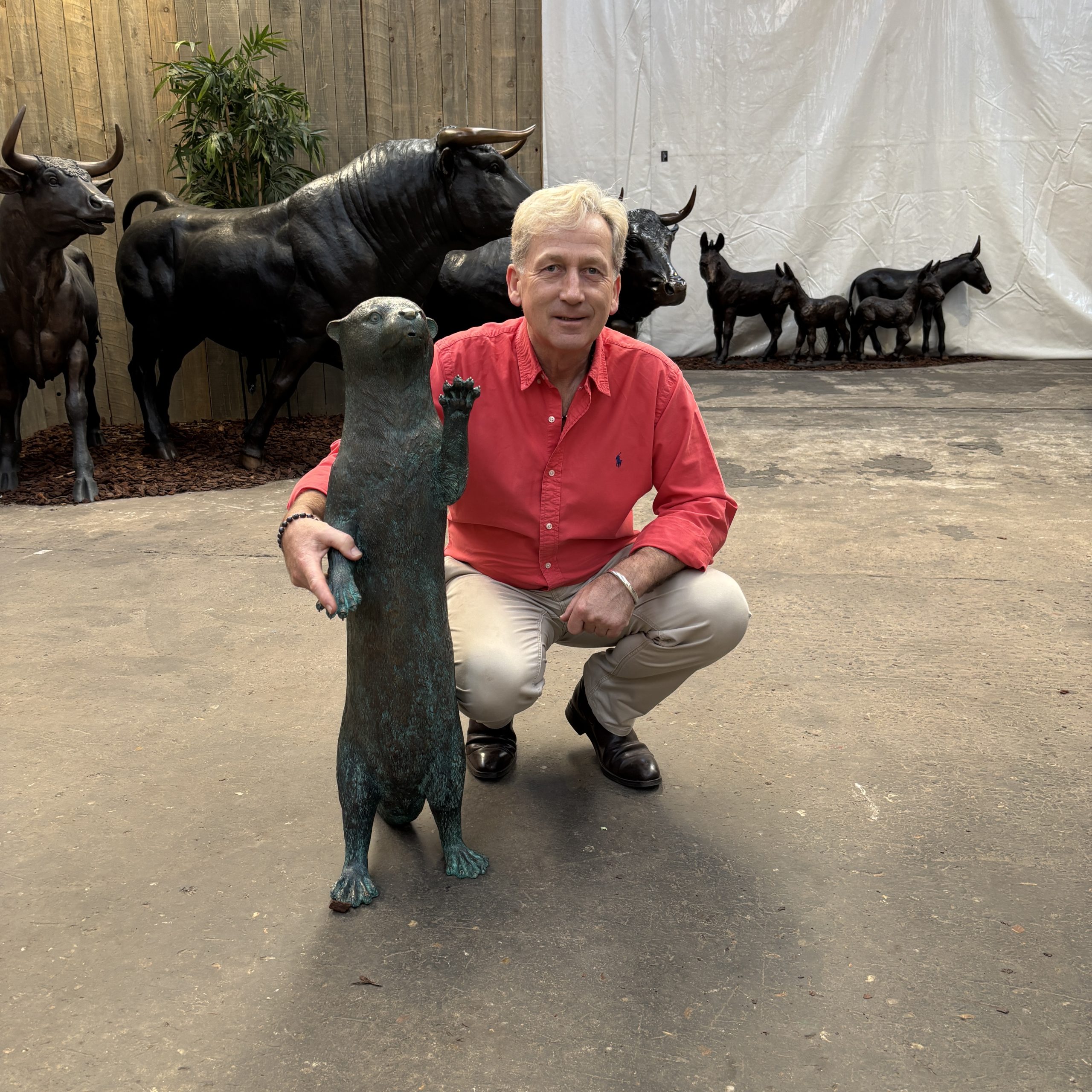
Standing upright at 90 cm high, the otter appears alert and inquisitive. One paw reaches forward, while the expressive face seems to investigate whatever is happening nearby.
However, this sculpture becomes particularly interesting when considered as part of its surroundings.
Rather than simply placing a bronze ornament in the garden, it offers an opportunity to create an entire waterside scene around one of Britain’s most engaging native mammals.
Product Details
* Code: WI117
* Price: £2,330.00
* Size: 25 x 50 x 90 cm
* Material: Solid Bronze
* Finish: Green Patinated Bronze
* Fountain Water Feature
* Suitable for Permanent Outdoor Display
* Rust and Corrosion Free
To view the product page of the Bronze Otter Sculpture click here.
Why Otters and Water Naturally Belong Together
Few wildlife sculptures have such an obvious relationship with their surroundings.
Otters are closely associated with rivers, streams, lakes and wetlands. Therefore, introducing water to the sculpture feels completely natural rather than decorative.
The fountain adds movement while also bringing sound into the garden.
That can transform the atmosphere of a quiet corner.
Place the otter beside a pond and the gentle movement of water can reinforce the impression of a living waterside environment. Alternatively, create a dedicated fountain feature where the sculpture becomes the main attraction.
Either approach allows the garden itself to become part of the artwork.
Creating an Otter-Inspired Garden Setting
The most memorable sculpture displays rarely stop with the sculpture itself.
Surroundings matter.
For this bronze otter, consider ferns, ornamental grasses and generous waterside foliage. Natural stone and weathered timber could introduce further texture.
The green patinated finish works particularly well amongst planting.
Rather than competing with the landscape, its verdigris tones can connect visually with foliage and water.
Yet the 90 cm upright form remains tall enough to emerge clearly above lower planting.
This creates an interesting opportunity to reveal the sculpture gradually.
From one direction, visitors might see only the head and shoulders. As they move closer, the complete otter appears beside the water.
That sense of discovery can make a garden far more engaging.
Could a Garden Sculpture Encourage Us to Notice Real Wildlife?
Wildlife art can do something more interesting than reproduce the appearance of an animal.
It can remind us to think about the animal itself.
Otters depend on healthy aquatic environments. Historically, pollution, habitat degradation and changes to waterways contributed to severe declines in British otter populations.
Their story also demonstrates that damaged wildlife populations can recover when environmental conditions improve.
That makes the otter a particularly thought-provoking subject for a garden.
A sculpture beside a pond may encourage conversations about the creatures that depend upon water, from amphibians and insects to birds and mammals.
It might even inspire the owner to look differently at the habitat surrounding the bronze.
Designing a Garden With Wildlife in Mind
A beautiful garden and a wildlife-friendly garden do not have to be separate ideas.
Water can be one of the most valuable elements.
Even relatively modest ponds can attract an extraordinary range of life. Planting around them can provide shelter while creating a softer transition between water and the surrounding landscape.
The Curious Otter could become the artistic focal point within such a setting.
Importantly, the garden does not need to imitate an actual riverbank.
A contemporary pond can work just as successfully.
The sculpture provides the wildlife connection, while planting, stone and moving water establish the atmosphere.
This allows the owner to interpret the idea in a way that suits the architecture and character of their property.
Turn a Forgotten Pond Into a Destination
Many larger gardens contain areas that are attractive but rarely visited.
A pond at the far end of the grounds is a good example.
Introducing a significant sculpture can give people a reason to walk there.
The otter could sit beside the water as the reward at the end of a path. Add a bench nearby and the location becomes somewhere to stop rather than simply pass through.
For properties with larger grounds, this approach can help connect different areas of the landscape.
A sculpture does not always need to dominate the view from the house.
Sometimes the pleasure comes from discovering it.
A Wonderful Feature for Natural Swimming Ponds
Natural swimming ponds provide another particularly appropriate setting.
These environments already combine water, planting and recreation.
An otter feels completely at home within that visual language.
Position the bronze where it can be appreciated from both the water and surrounding terrace.
Its playful character also works well beside a swimming area without turning the setting into a novelty.
The result can feel sophisticated while retaining a sense of fun.
For families, that combination may be especially appealing.
Children are likely to respond immediately to the character of the animal, while adults can appreciate the quality, patina and permanence of solid bronze.
Introducing Movement and Sound to a Quiet Garden
Garden design is usually discussed in visual terms.
However, sound can change a space just as dramatically.
Flowing water introduces gentle background noise and can make a seating area feel more secluded.
It also creates movement where planting and sculpture would otherwise remain still.
This is where a fountain sculpture offers something different from conventional wildlife art.
The bronze provides the permanent focal point. Meanwhile, the water continually changes.
Sunlight catches it differently throughout the day, while the sound varies according to the surrounding environment.
As a result, the feature never feels entirely static.
Where Should You Position an Otter Fountain?
There is no single correct location.
A pond edge is perhaps the most natural choice. Streams, garden pools and larger water features provide equally convincing surroundings.
However, water does not have to be present already.
The fountain can establish its own identity within a landscaped border or courtyard.
Consider the direction from which people will first approach.
Because the otter has such an inquisitive expression, positioning it where it appears to notice arriving visitors can create an amusing effect.
The upright silhouette also makes the sculpture suitable for narrower locations where a long horizontal wildlife bronze might prove difficult to accommodate.
At only 25 cm across one dimension, it can provide substantial height without demanding an enormous footprint.
A Bronze That Changes With the Seasons
Permanent garden sculpture becomes part of the changing landscape.
In spring, new foliage can begin to emerge around the otter.
Summer provides dense green planting and the greatest opportunity to integrate it into a lush waterside setting.
During autumn, bronze and verdigris tones can sit beautifully against changing leaves.
Winter reveals something different again.
When surrounding planting retreats, the detailed form becomes more exposed and the sculpture can take a stronger role within the garden.
Because solid bronze does not rust or corrode, the otter can remain outdoors throughout these seasonal changes.
There is no need to treat it as temporary summer decoration.
After Dark, the Character Changes Again
Lighting can completely transform wildlife sculpture.
A discreet light positioned near the pond could illuminate the otter’s face and textured body while leaving surrounding planting partly in shadow.
The effect may be surprisingly atmospheric.
Moving water adds another dimension because reflected light creates subtle changes across the scene.
For a terrace or seating area used during the evening, this can extend enjoyment of the sculpture long after daylight has disappeared.
Commercial gardens can benefit in the same way.
Restaurants, hotels and visitor attractions often remain active into the evening, making thoughtful illumination particularly worthwhile.
From Private Gardens to Wildlife Parks
Although this sculpture has obvious appeal for private gardens, its potential extends much further.
Zoological gardens and wildlife parks could use it within landscaped visitor areas.
Nature centres, aquatic attractions and conservation-themed gardens provide equally natural settings.
In these environments, the recognisable animal can help establish a connection between visitors and the wider theme of water and wildlife.
The sculpture could also become a memorable photographic feature.
At 90 cm high, children can engage with it at close range, while adults can appreciate the detailed bronze craftsmanship.
Hotels and leisure destinations with natural ponds, riverside grounds or wildlife gardens could consider it for similar reasons.
An Engaging Sculpture for Educational Environments
The otter also has potential within educational landscapes.
A nature garden connected to a school, environmental centre or wildlife organisation could use sculpture to encourage curiosity.
The artwork itself does not need to become an information board.
Instead, it can provide the starting point for questions.
Where do otters live? What do they eat? Why do healthy waterways matter? What other wildlife shares the same habitat?
That is one of the strengths of recognisable wildlife sculpture.
People often connect emotionally with an animal first. From there, interest in the wider natural environment can follow.
See the Curious Otter in Our Video
A sculpture with this much personality benefits enormously from being seen in motion.
Our video allows you to look around the otter and appreciate the upright stance, reaching paw and expressive face from different angles.
It also provides a better understanding of the proportions before choosing a location.
At 90 cm high, the sculpture has considerably more presence than a conventional small garden ornament.
Video helps communicate that distinction.
For customers purchasing online, moving footage also provides useful reassurance about the quality and three-dimensional character of the bronze.
Real Photography Helps Put 90 cm Into Perspective
Measurements tell only part of the story.
That is why our photography includes images both with and without a person alongside the sculpture.
Seeing the otter next to someone immediately communicates its physical presence.
Other photographs allow the sculpture itself to take centre stage.
Together, these different viewpoints make it easier to imagine the bronze beside your own pond, within planting or as part of a dedicated fountain feature.
They can also help when planning surrounding landscaping before the sculpture arrives.
More Than a Garden Ornament
Perhaps the most interesting aspect of the Curious Otter is how many different elements come together in one piece.
It is wildlife sculpture, but also a functioning fountain.
It introduces character without becoming novelty.
The green patina allows it to settle naturally into planting, while its upright 90 cm form gives it enough presence to remain visible.
Most importantly, the subject has a genuine relationship with water.
That makes it possible to design the surrounding garden around the animal rather than simply finding an empty space for another ornament.
For a private wildlife garden, pond, zoological collection, nature attraction or conservation-inspired landscape, that distinction matters.
Let the Otter Inspire the Landscape Around It
The best position for this bronze may begin with a simple question:
What would make an otter feel at home here?
Perhaps the answer is a pond edged with ferns and grasses.
It could be a quiet stream, natural swimming pool or secluded corner reached along a garden path.
For a wildlife park, the answer might involve an educational garden designed around aquatic habitats.
Whatever the setting, thinking beyond the sculpture can produce something far more memorable.
The Curious Otter provides the character. Water introduces movement and sound. Planting creates habitat and atmosphere.
Bring those elements together and a bronze sculpture can become the starting point for an entire garden scene.

Sorry, the comment form is closed at this time.